UC Davis engineers are innovating at high and low temperatures to enable travel at hypersonic speeds and sustainably keep food safe and fresh, respectively.
Materials Science and Engineering Assistant Professor Scott McCormack and his team received $1.4M from the Air Force Office of Science and Research to reduce uncertainty and standardized processing techniques for ultra-high temperature ceramics.
Ultra-high temperature ceramics (UHTCs) are ceramic materials that melt at temperatures above 3000˚C, nearly 5500˚F. Their ability to withstand extreme heat loads makes them ideal for building hypersonic vehicles and platforms, but UHTCs can be difficult to process reliably.
Materials Science and Engineering Associate Professor Roopali Kukreja has received the prestigious National Science Foundation Faculty Early Career Development (NSF CAREER) Award.
Materials Science and Engineering Assistant Professor Seung Sae Hong recently received a prestigious National Science Foundation Faculty Early Career Development (NSF CAREER) Award. The CAREER award is the agency’s highest honor for young faculty. It recognizes those with the potential to be leaders in their fields and funds five-year research and education projects that should serve as the foundation for their careers.
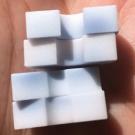
In the spring of 2021, a team of undergraduate students at UC Davis collaborated with Elcon Precision on a project as part of the EMS 188 course. The students were excited to explore the question of nucleation and discoloration in high calcia alumina.
Professor Ricardo Castro teaches engineering students to think outside the box and to contemplate the unlikely, but not always impossible, real-world applications of materials science based on the powers of superheroes.
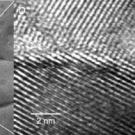
Optimizing the performance of electrolytes used in alternative energy technologies such as solid oxide fuel cells, and batteries relies on measuring and understanding the transport of oxide and lithium (Li) ions (O2- and Li+) and/or protons (H+) in ceramic materials.
Materials science and engineering (MSE) former undergraduate researcher Joyce Christiansen-Salameh has developed a new way to analyze complex x-ray nano-diffraction datasets using a k-means clustering algorithm. The program iteratively groups data points by clustering pixels with similar intensity within a certain distance on the detector, which makes it easier to find the Bragg peaks that reveal the structure.
Materials science and engineering associate professor Marina Leite thinks machine learning is key to the next big breakthrough in renewable energy. With a new three-year grant from the National Science Foundation, Leite will use machine learning techniques to study perovskite solar cells, a class of highly efficient but volatile devices, to find the optimal conditions to run them reliably.